

Buying a pickup truck for the first time is a significant milestone, whether you’re planning to use it for hard work on the job site, hauling trailers for weekend adventures, or simply enjoying a commanding ride on your daily commute. With so many makes, models, and features available, it can be overwhelming to determine precisely what you need. Taking the time to conduct thorough research and working with a dedicated pickup dealer can help you find a truck that suits every aspect of your lifestyle.
Understanding factors like towing capacity, engine performance, and cab size is crucial to making the right investment. Not only does your selection affect your budget and day-to-day convenience, but opting for the right features ensures your new pickup remains a valuable asset for years to come. Whether you prioritize comfort, fuel efficiency, or raw power, the following guide will make your search easier and help you navigate the journey from browsing to ownership with confidence.
Assess Your Needs
Before browsing brands and test-driving models, consider how you’ll actually use your pickup. Will it primarily be a workhorse for construction gear, a family hauler for road trips, or a blend of both? The answer determines your must-have features. Make note of any towing needs (boat, trailer, or RV), expected payload weight, the type of terrain you’ll drive on, and how many passengers you regularly transport. Being honest about your primary use case helps narrow down your choices. It prevents overspending on features you don’t need, while ensuring that those you do need—such as four-wheel drive or advanced towing technology—are included.
Understand Engine Size and Axle Ratio
Two of the most critical components affecting a truck’s power, hauling ability, and efficiency are its engine and axle ratio. Generally, larger engines (V6 or V8) supply more horsepower and torque, giving you more capability for heavy-duty towing and climbing, but often at the cost of higher fuel consumption. The axle ratio works hand in hand: a higher ratio increases towing strength, but can lower fuel economy.
If you primarily drive around town and occasionally haul light cargo, a smaller engine and a standard axle ratio may be the best choice for you. However, if you regularly tow a trailer or need to carry heavy loads, look for a vehicle with a higher axle ratio and a robust engine. For more insights on these technical decisions, the Edmunds Truck Buying Guide is a trusted national resource.
Choose the Right Cab and Bed Size
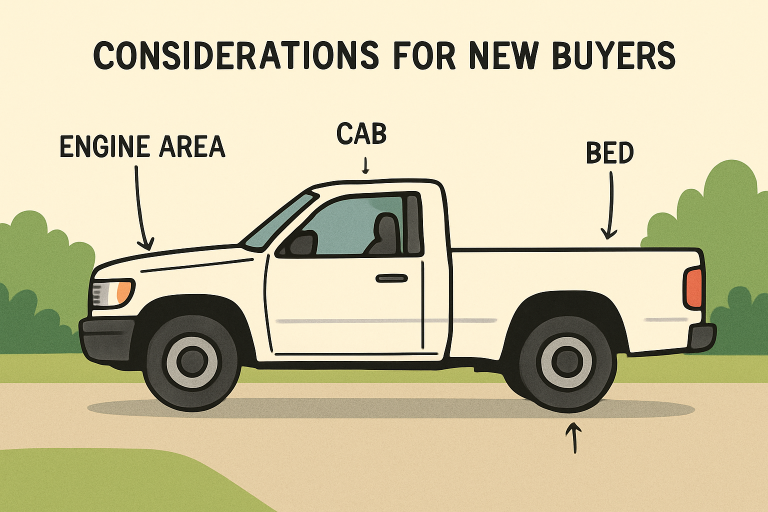
Pickup trucks are available with a variety of cab and bed options. Regular cabs offer seating for up to three, making them ideal for those who prioritize cargo space over passenger room. Extended cabs feature a rear bench and small doors, making them suitable for occasional extra riders or secure gear storage. If family, friends, or crew members will ride often, a crew cab with four full-sized doors is usually the most comfortable.
- Regular Cab: Compact and highly maneuverable.
- Extended Cab: Good compromise for mixed passenger/cargo duty.
- Crew Cab: Maximum passenger room for families or work crews.
Bed lengths typically run from about 5.5 to 8 feet. Consider the size of your projected loads, any garage or parking space limitations, and how often you’ll need a longer bed versus a shorter, more easily parked truck. Edmunds’ Truck Basics to Consider provides detailed comparisons for further reading on size and configuration.
Prioritize Safety Features
Today’s pickups can be equipped with a range of active and passive safety systems. Essential features to look for include airbags, anti-lock brakes, backup cameras, and stability control. Advanced driver-assistance technologies—such as lane-keeping assist, adaptive cruise control, and blind-spot monitoring—are well worth the investment for long-term peace of mind and could lower your insurance premiums. Some pickups also earn higher safety ratings from organizations like the IIHS and NHTSA, so be sure to check crash test reports in your research.
Consider Fuel Efficiency
Pickup trucks have made great strides in fuel economy in recent years. Many manufacturers offer hybrid engines, diesel options, and advanced transmissions to help drivers reduce their fuel consumption. Consider your average commute, annual mileage, and current fuel prices when making a decision. A more efficient truck will result in ongoing savings and may even retain a higher resale value if fuel prices continue to fluctuate. For comprehensive fuel consumption data, visit the official U.S. Department of Energy’s Fuel Economy site.
Research and Compare Models
Don’t settle for the first model that catches your eye. Read professional reviews, compare owner feedback, and look for reliability data to inform your decision. Test drive a few trucks that meet your criteria and take note of their ride quality, visibility, tech integration, and interior comfort. Comparing trims and features across multiple brands will help you get a truck that genuinely matches your expectations and budget.
Evaluate Dealership Reputation
The service you get from your dealership can make a significant difference when buying a pickup. Look for dealerships with excellent reputations, transparent pricing, and good after-sales support. Read online reviews, check ratings from reputable sources like the Better Business Bureau, and speak with current customers to gauge their experiences before making a purchase.
Understand Financing Options
Truck financing can vary widely, so it’s smart to compare rates from banks, credit unions, and the dealership. Ask about any special rates, manufacturer incentives, or cash-back offers that could reduce your total cost. Carefully read the loan agreement and clarify any unfamiliar terms. Be prepared with a down payment, and consider getting pre-approved to streamline the buying process. Proper financing can secure your ideal truck without straining your budget.
A thoughtful approach to your first truck purchase ensures that the excitement lasts long after you drive off the lot. With the proper research and support, your new truck will deliver capability, safety, and enjoyment for years to come.
